
Massage vs Chiropractic Recovery: Which Helps?

A tight lower back after a long drive, a stiff neck after a collision, or a sore shoulder that will not settle can all raise the same question: should you book massage, chiropractic care, or both? In massage vs chiropractic recovery, the better choice is rarely about which treatment is universally superior. It is about the source of your symptoms, your current function, and what your body needs to move forward safely.
Both therapies can play a valuable role in conservative musculoskeletal care. They use hands-on treatment, but they approach recovery differently. A proper assessment helps determine whether one service, a coordinated plan, or a referral for further medical evaluation is most appropriate.
Massage vs Chiropractic Recovery: The Core Difference
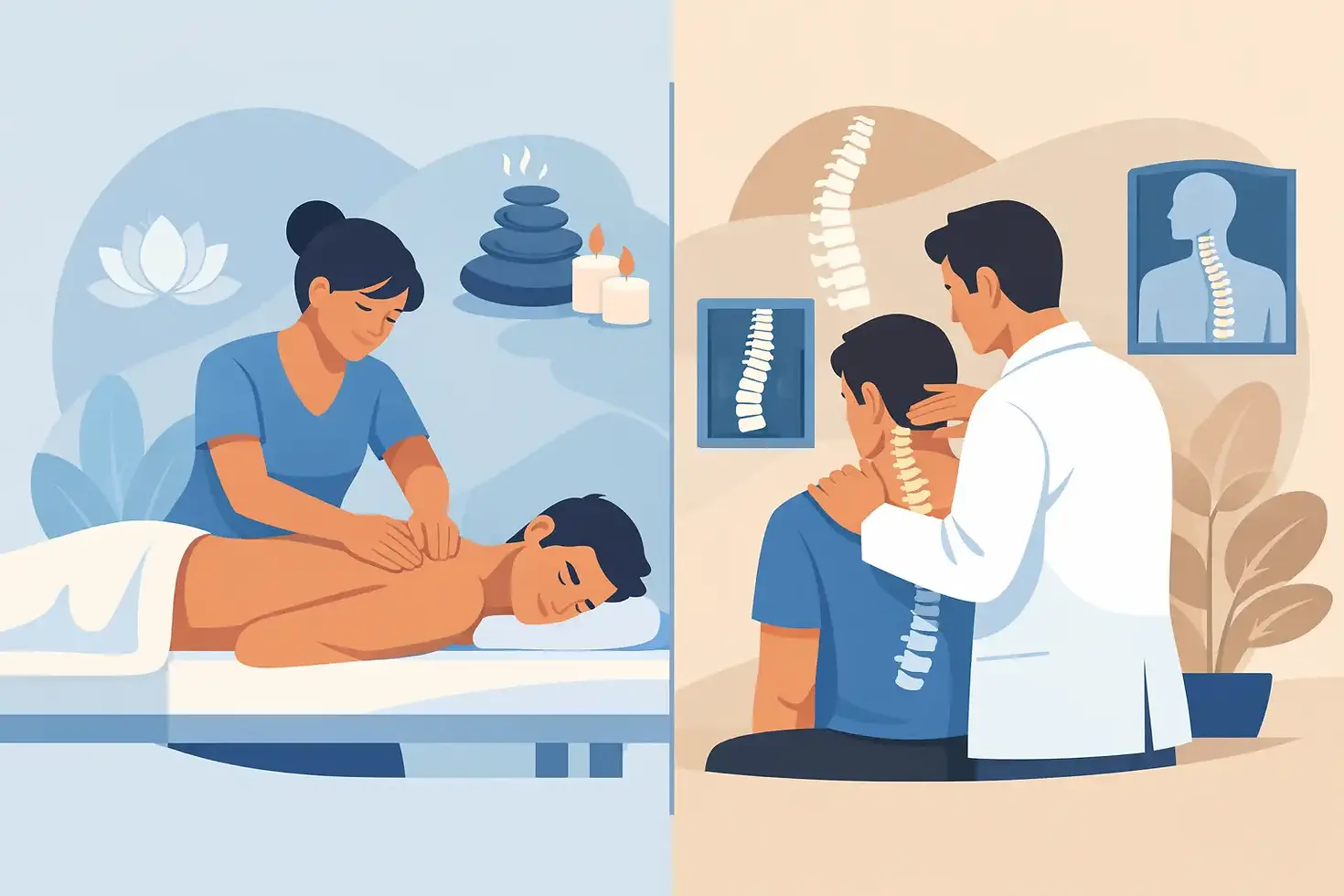
Massage therapy primarily works with muscles and other soft tissues. A registered massage therapist may use techniques that reduce muscle tension, improve comfort, and help restore movement in areas affected by overuse, training, work demands, or protective guarding after an injury. Treatment can range from relaxing to more focused work, depending on your symptoms and tolerance.
Chiropractic care focuses on assessing and managing musculoskeletal conditions involving joints, movement patterns, nerves, muscles, and function. Treatment may include joint mobilization or manipulation, soft-tissue therapy, exercise guidance, ergonomic advice, and education about activity modification. The goal is not simply to make a painful area feel looser. It is to identify meaningful limitations in movement and build a practical path back to daily activities, work, sport, or training.
There is natural overlap. A chiropractor may address muscular tension, while massage therapy can support mobility and recovery around a stiff or irritated joint. The distinction is most useful when deciding where to start: massage commonly centres on soft-tissue comfort and relaxation, while chiropractic care generally begins with a broader musculoskeletal assessment and a treatment plan tied to function.
When Massage May Be the Better Starting Point
Massage can be an excellent option when muscle tightness, fatigue, or stress-related tension is your main concern. For example, a desk worker with sore upper traps, a runner with heavy calves after a training block, or a driver with general back tightness may find relief through targeted massage therapy.
It can also be helpful during recovery from an injury when surrounding muscles are guarding or becoming overloaded. After a painful episode, people often alter how they move without realizing it. That compensation can leave other areas working harder. Massage may help reduce discomfort in those tissues, making gentle movement and rehabilitation exercises more manageable.
Massage is not always the complete answer, however. If pain is linked to a significant loss of range of motion, repeated joint locking, radiating symptoms, weakness, headaches with neck dysfunction, or difficulty returning to normal activity, a more comprehensive assessment may be needed. Feeling better after a massage is useful, but lasting recovery also depends on why the tension developed in the first place.
When Chiropractic Care May Be the Better Starting Point
Chiropractic care may be a strong first choice when pain is limiting movement or interfering with work, sleep, exercise, or everyday tasks. This includes common conditions such as mechanical low back pain, neck pain, sciatica-like symptoms, whiplash-associated pain, certain headaches, shoulder or hip movement restrictions, and sports injuries.
The appointment begins with a clinical history and physical examination. Your chiropractor will look at symptom behaviour, mobility, strength, relevant neurological findings, and the activities that aggravate or relieve your pain. That information matters because two people can both say they have “back pain” while needing very different care plans.
A person who hurts when bending after lifting a box may benefit from a different approach than someone whose pain started gradually after months at a workstation. Similarly, recovery after a motor vehicle collision may require a measured plan that addresses neck mobility, headache triggers, muscle guarding, and a safe return to activity. Hands-on treatment may be part of care, but it should be paired with clear advice about what to do between visits.
Chiropractic treatment is also useful when you want help progressing from symptom relief to resilience. This may include specific mobility work, strengthening, changes to lifting technique, adjustments to a workstation, or guidance on modifying training without stopping all activity unnecessarily.
How to Choose Based on Your Symptoms and Goals
The simplest question is: what is stopping you from doing what you need or want to do?
If your main issue is generalized muscle soreness, tension, recovery after training, or stress that is showing up physically, massage therapy may fit well. It can be especially helpful when you want focused soft-tissue care and your symptoms are not accompanied by substantial functional loss.
If you have pain with specific movements, reduced joint motion, recurring flare-ups, tingling, symptoms travelling into an arm or leg, or uncertainty about what is causing the problem, chiropractic assessment can provide more direction. It is also a practical starting point when your goal is to understand your condition and receive a structured plan rather than a single comfort-focused treatment.
Your preferences matter too. Some people respond well to regular massage as part of managing physically demanding work or athletic training. Others value a chiropractic approach that combines hands-on care with exercise and movement coaching. Neither choice has to be permanent. Recovery plans should change as symptoms, confidence, and function improve.
Why Combining Care Can Make Sense
For many people, massage and chiropractic care are complementary rather than competing services. A patient with a stiff, painful neck may benefit from chiropractic assessment and joint-focused treatment while using massage to address persistent muscle tension around the shoulders and upper back. Someone recovering from a running injury may use massage for calf or hip muscle overload while receiving chiropractic care for movement restrictions, load management, and return-to-running guidance.
The benefit of combining care is not simply getting more treatment. It is making sure each service has a clear purpose. If treatment is helping you move better, tolerate work, sleep more comfortably, or return to activity with fewer setbacks, it is contributing to recovery. If progress has stalled, the plan should be reassessed rather than repeated automatically.
At Dennis Chiropractic, care recommendations are based on the assessment, your goals, and honest clinical judgement. Some patients need chiropractic treatment, some benefit most from massage therapy, and some need a combination of services. When conservative musculoskeletal care is not the right fit, appropriate referral is part of safe care.
Safety Matters More Than a Quick Fix
Most muscle and joint pain improves with sensible conservative care, but not every symptom should be treated as routine stiffness. New or worsening weakness, numbness that is spreading, loss of bladder or bowel control, severe unrelenting pain, fever, unexplained weight loss, significant trauma, or pain that does not match a mechanical pattern needs prompt medical assessment.
You should also tell your practitioner about recent surgery, osteoporosis, blood-thinning medication, pregnancy, inflammatory conditions, cancer history, fractures, and any imaging or specialist care you have received. This information helps guide treatment choices and may change what is appropriate on a given day.
Some soreness after either massage or chiropractic treatment can occur, particularly when you are already sensitive or returning to activity after an injury. It should generally be mild and temporary. Treatment should not leave you feeling repeatedly worse, frightened to move, or dependent on frequent appointments to function. A good plan supports your ability to do more for yourself over time.
What a Useful Recovery Plan Looks Like
The most effective plan is specific. It explains what is likely contributing to your pain, what treatment is intended to change, and what you can do at home or work to support progress. Early on, that may mean reducing an aggravating activity temporarily, using comfortable movement, and attending focused appointments. As symptoms improve, the emphasis should shift toward restoring strength, capacity, and confidence.
Recovery is rarely perfectly linear. A busy week, a long commute, poor sleep, or returning to sport too quickly can cause a flare-up without meaning you are back at square one. The goal is to recognize those patterns, adjust early, and keep building tolerance instead of waiting for pain to become severe again.
Choose care that gives you a clearer understanding of your body and a realistic next step. Whether massage, chiropractic treatment, or both are appropriate, the right approach should help you move with more comfort and confidence in the life you need to get back to.


Comments