
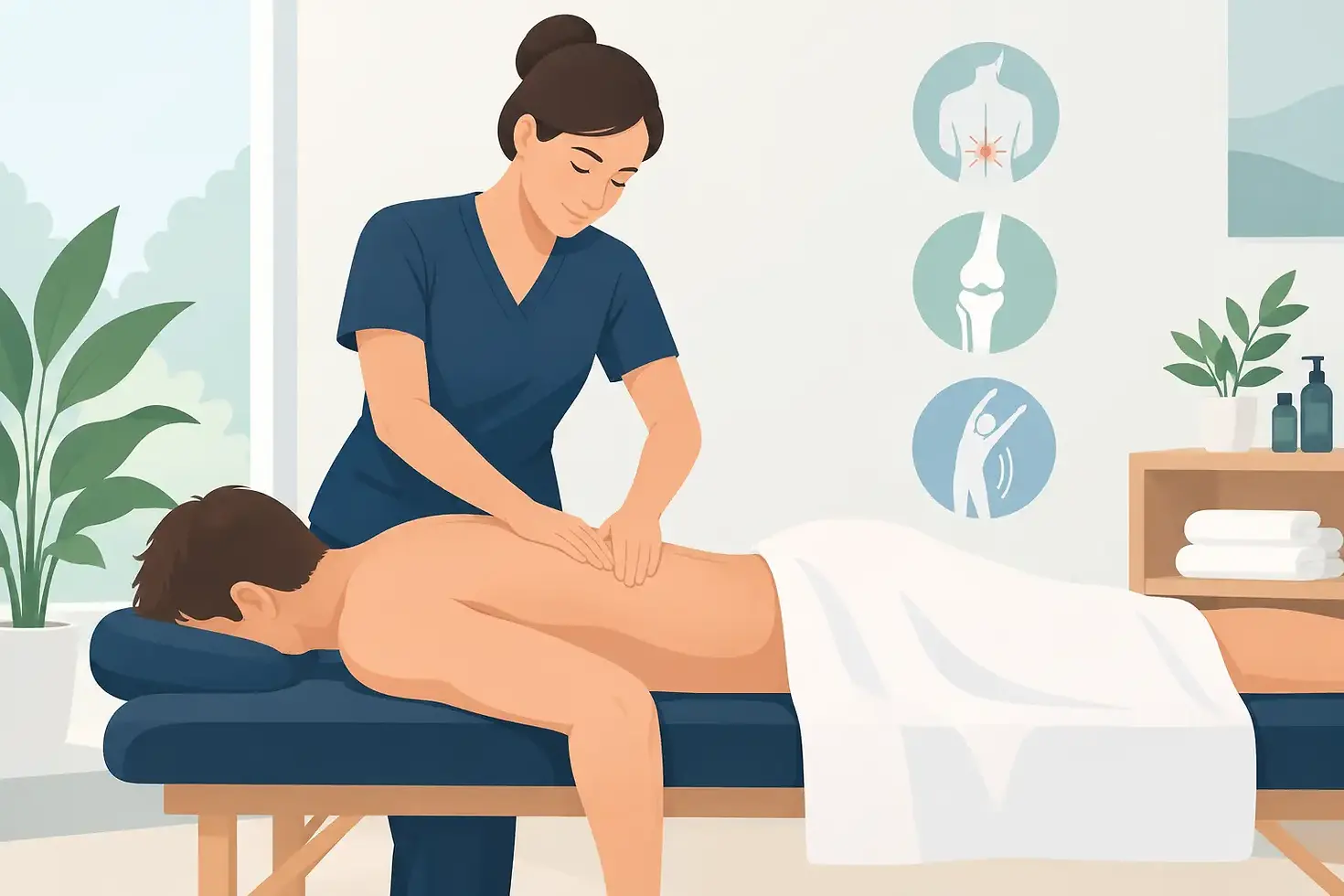
Massage Therapy for Pain Relief and Mobility

A stiff neck after a long week at a desk, low back tightness after driving, or a calf that will not settle after a run can make ordinary movement feel harder than it should. Massage therapy is often a practical part of conservative care for these problems, especially when pain, muscle tension, and reduced mobility are limiting work, sport, sleep, or daily routines.
The goal is not simply to feel relaxed for an hour. A well-planned treatment can help reduce discomfort, improve tolerance for movement, and support recovery from musculoskeletal strain or injury. The right approach depends on your symptoms, medical history, activity demands, and what your assessment finds.
What Massage Therapy Can Help With
Massage therapy uses hands-on techniques to work with muscles and other soft tissues. Depending on the concern, treatment may include lighter relaxation-focused work, more targeted pressure, trigger point techniques, assisted stretching, or work around areas that are compensating for an injury.
For many people, massage is helpful when pain is associated with muscle guarding, repetitive strain, overuse, or a recent change in workload. Common reasons patients seek care include neck and shoulder tension, low back pain, headaches linked to muscle tension, sports-related soreness, hip tightness, and discomfort following a motor vehicle collision.
It can also be useful during rehabilitation. For example, someone recovering from an ankle injury may develop calf tightness because they have been walking differently. A desk worker with upper back pain may have reduced tolerance for sitting because the neck, shoulder, and chest muscles are continually working to hold a guarded posture. In these cases, hands-on treatment may make it easier to begin or progress the movement and strengthening work that supports longer-term recovery.
Massage is not a stand-alone answer for every condition. Persistent tendon pain, osteoarthritis, sciatica, plantar fasciitis, and recurring low back pain often require a broader plan that may include exercise, load modification, education, chiropractic care, acupuncture, or further medical assessment. Relief matters, but the plan should also address why the problem keeps returning.
How Massage Therapy May Reduce Pain
Pain is not always a direct measure of tissue damage. Muscles can become sensitive and protective after an injury, during periods of stress, or when the body has been exposed to the same task for too long. This sensitivity can make movement feel restricted even when gentle movement is safe.
Massage may reduce this protective response by providing comfortable, targeted sensory input to the area. It can temporarily improve tissue tolerance, reduce the feeling of tightness, and help patients move with more confidence. Some people also experience short-term improvements in circulation and relaxation, which can be valuable when soreness and tension are interfering with sleep or recovery.
The evidence for massage therapy supports its role as one option for certain musculoskeletal pain conditions, particularly when it is part of an active, individualized care plan. It is less useful to think of treatment as “breaking up” scar tissue or permanently correcting posture in a single appointment. Those explanations oversimplify how the body adapts and heals.
A better expectation is that treatment can create a window of reduced pain or improved mobility. That window can be used to return to walking, training, work tasks, or rehabilitation exercises with less discomfort.
Pressure Should Match the Problem
More pressure is not automatically better. Deep tissue work can feel helpful for some people, but excessive pressure may leave an already-irritated area more sore and guarded. This is particularly relevant after a recent injury, when symptoms are flared up, or when a person is not used to massage.
Your therapist should adjust the treatment to your comfort and response. Clear communication is part of effective care. If the pressure feels sharp, causes you to hold your breath, or leaves you significantly worse for more than a day or two, the approach may need to change.
What to Expect at an Appointment
A useful massage appointment starts with more than choosing an area that hurts. Your therapist should ask about your symptoms, relevant injuries, health history, work or sport demands, and goals. They may assess movement, identify areas of muscle sensitivity, and discuss whether massage is appropriate that day.
Treatment is then tailored to the findings. A patient with tension headaches may need attention to the upper back, neck, shoulders, and jaw-related muscles, along with advice on breaks and movement during the workday. Someone with low back pain may benefit from treatment to the surrounding hip and trunk muscles, but also from practical guidance on returning to lifting, walking, or gym activity.
You remain covered with sheets or towels throughout the treatment, with only the area being worked on exposed. You can ask questions, request an adjustment in pressure, or stop treatment at any time. A professional setting should feel clear, respectful, and comfortable.
Afterward, mild tenderness can occur, especially following more focused work or when muscles have been very sensitive. This usually settles within 24 to 48 hours. Gentle movement, normal hydration, and avoiding a sudden jump in strenuous activity are generally sensible. There is no need for extreme detox routines or prolonged rest after a typical appointment.
When Massage Is Not the Right First Step
Honest clinical decision-making includes recognizing when hands-on care should be delayed or when another assessment is needed. Massage may not be appropriate over an acute fracture, active infection, open wound, suspected blood clot, or an area with unexplained severe swelling. People taking blood-thinning medication, undergoing cancer treatment, living with osteoporosis, or managing certain vascular or neurological conditions may need modifications or medical clearance.
New or worsening weakness, loss of bowel or bladder control, numbness in the groin area, fever with severe back pain, unexplained weight loss, chest pain, or symptoms following significant trauma need prompt medical attention. These symptoms are not typical muscle tightness.
This is why an assessment matters. If the presentation does not fit a straightforward musculoskeletal problem, referral for medical care, imaging, or another provider may be the safer choice. At Dennis Chiropractic, conservative care is recommended when it fits the clinical picture, not simply because an appointment is available.
Getting More From Your Treatment Plan
The number of visits that makes sense varies. A recent neck strain may improve with a short course of care and a few simple exercises. Long-standing pain with recurring flare-ups may require a more gradual approach, especially if work demands, sleep disruption, stress, or reduced conditioning are contributing factors.
The most effective plan is usually one you can realistically follow. If you spend eight hours driving, a two-minute movement break at each stop may be more useful than an elaborate routine you will not do. If you are returning to running after an injury, gradual increases in distance and intensity are often more important than chasing temporary soreness relief.
Massage therapy can be a valuable tool for pain relief and movement, but it works best when the treatment has a clear purpose. If discomfort is stopping you from doing the things you need or want to do, an assessment can help determine whether hands-on care, active rehabilitation, or another next step is most likely to move you forward.



Comments