
How Long Does Neck Pain Last?

You wake up, turn your head, and something feels off. Maybe it is a stiff neck after sleeping awkwardly, soreness after a long drive, or pain that started after a workout or car accident. A common question is how long does neck pain last, and the honest answer is that it depends on the cause, the severity, and how quickly the problem is addressed.
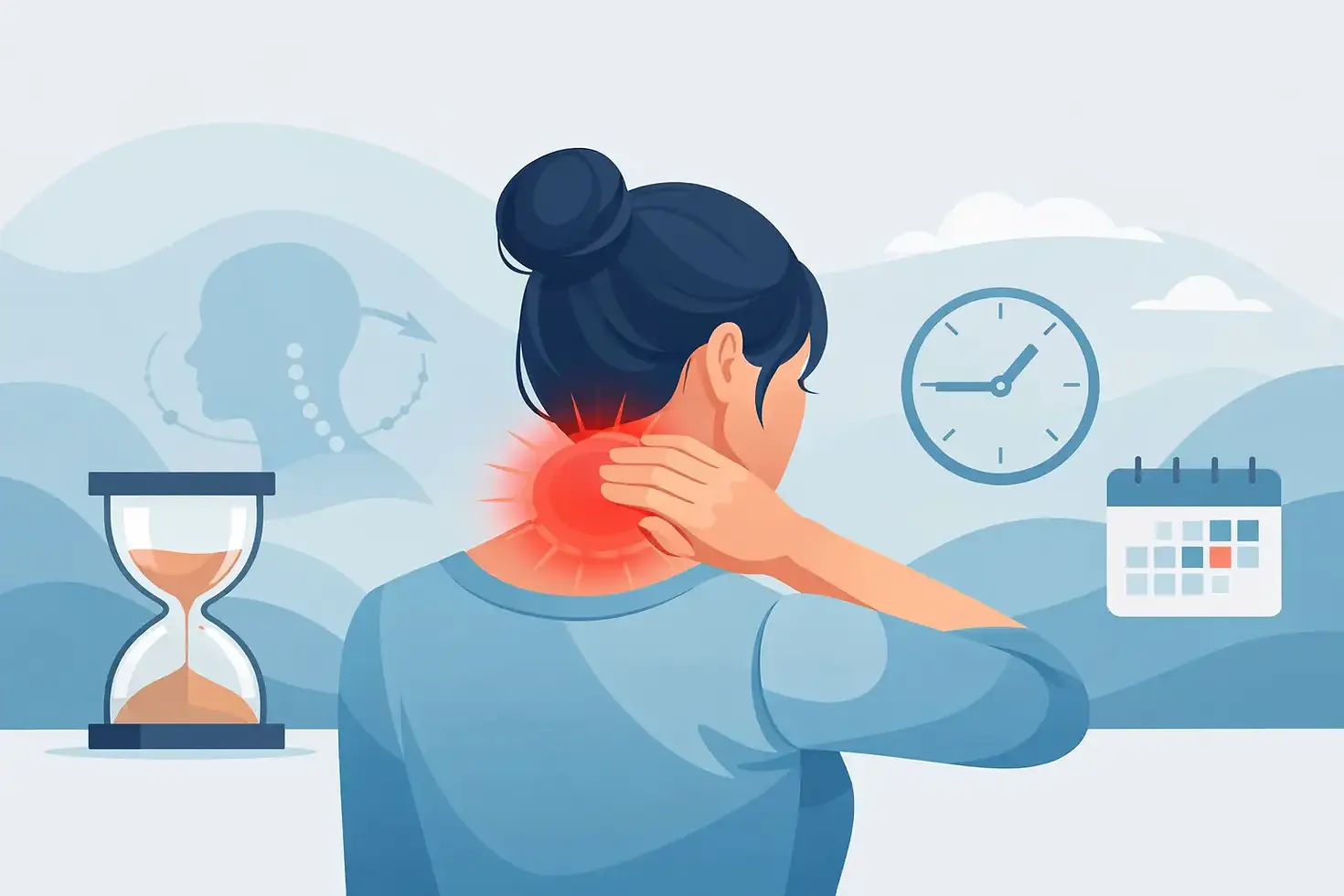
Most neck pain is not permanent. In many cases, it improves within days to a few weeks. But some cases settle quickly while others linger, especially when pain is linked to whiplash, joint irritation, nerve involvement, repetitive strain, or a long-standing postural issue. Knowing what timeline is typical can help you decide when to monitor it, when to modify activity, and when to get assessed.
How long does neck pain last in most cases?
For mild mechanical neck pain, the timeline is often short. If the pain came on after sleeping in an awkward position, working at a computer for too long, or minor muscle strain, it may start easing within a few days and resolve within 1 to 2 weeks. These cases often respond well to relative movement, gentle stretching, heat or ice, and avoiding prolonged positions that keep the neck irritated.
When the pain is moderate, the recovery window is usually longer. A more noticeable strain, a flare-up from repetitive work, or a sports-related irritation may take 2 to 6 weeks to settle. During this time, symptoms can fluctuate. It is common to feel worse in the morning, after desk work, or after driving, then somewhat better with movement.
If neck pain has lasted more than 3 months, it is generally considered chronic. That does not mean it cannot improve. It means the pain pattern is more established and often needs a more structured approach that addresses joint mobility, muscle tension, strength, work setup, sleep habits, and sometimes stress-related tension as well.
Recovery time depends on the cause
Not all neck pain behaves the same way. Muscle strain, joint irritation, nerve compression, and whiplash can all feel similar at first, but their recovery patterns are different.
A simple muscle strain often improves the fastest. This is the kind of pain that feels sore, tight, and limited with movement but does not usually cause numbness, tingling, or symptoms into the arm. It may be uncomfortable, but it tends to improve steadily.
Joint-related neck pain can take longer. Small joints in the cervical spine can become stiff or irritated, especially after repetitive posture or sudden movement. This often causes sharp pain when turning the head, pain at the base of the skull, or discomfort that refers into the upper back or shoulder blade.
Nerve-related neck pain usually needs closer attention. If pain travels into the shoulder, arm, or hand, or if there is tingling, numbness, or weakness, the timeline can be more variable. Some nerve irritations improve in a few weeks, while others can last for months if the source of compression or inflammation is not improving.
Whiplash is another category with a wide range. Some people recover within a few weeks. Others have symptoms for several months, especially if there is more significant tissue irritation, headaches, dizziness, jaw tension, or heightened pain sensitivity after the accident.
What affects how long neck pain lasts?
Severity matters, but it is not the only factor. Two people can have similar pain levels and recover at very different speeds.
The first variable is how the pain started. Sudden trauma, such as a collision or fall, usually deserves a more thorough assessment than pain that developed gradually after poor posture or overuse. Trauma can involve more than muscle tightness.
The second is whether the pain is improving, even slowly. A neck that is still sore but a little better each week is usually less concerning than a neck that is getting worse, spreading into the arm, or causing more stiffness over time.
Work and lifestyle also matter. Desk workers, drivers, tradespeople, and anyone doing repetitive lifting or overhead activity can keep re-irritating the area without realizing it. Long hours in one position often slow recovery.
General health plays a role too. Sleep quality, stress, activity levels, previous injuries, and age can all affect tissue recovery and pain sensitivity. This is one reason why a quick fix is not always realistic. The goal is not just to calm symptoms, but to reduce the factors that keep the pain going.
When neck pain should be assessed sooner
A short period of neck pain is common. Still, some symptoms should not be ignored.
If pain started after a motor vehicle accident, sports collision, or significant fall, it is worth getting checked, even if you hoped it would simply go away. The same applies if neck pain is severe, prevents normal movement, or is paired with headaches that feel unusual for you.
Medical assessment is also important if you notice numbness, tingling, arm weakness, dropping objects, or pain that shoots down the arm. These symptoms can suggest nerve involvement.
Other red flags include fever, unexplained weight loss, pain that is constant and unrelenting, pain that wakes you consistently at night, or symptoms such as balance problems and difficulty with coordination. Those cases need prompt medical attention and may not be appropriate for conservative musculoskeletal care alone.
An evidence-based clinic should be clear about this. Honest clinical judgment means treating the cases that fit and referring when they do not.
What can help neck pain resolve faster?
Complete rest is rarely the answer. In most uncomplicated cases, gentle movement helps more than immobilizing the neck. Short walks, posture changes, and controlled range-of-motion exercises are often useful early on.
Heat can help reduce muscle guarding, while ice may be useful in the first day or two after a recent flare-up or injury. People respond differently, so comfort matters. There is no prize for picking the less effective option.
Ergonomics can make a meaningful difference. If your screen is too low, your seat pushes your head forward, or you spend hours looking down at a phone, symptoms may keep returning. Small setup changes can reduce repeated strain.
Hands-on care may also help, particularly when pain is mechanical and movement is limited. Evidence-based treatment can include manual therapy, soft tissue treatment, exercise guidance, and in some cases acupuncture for pain control. The right plan depends on whether the main issue is stiffness, muscle tension, referred pain, whiplash, or nerve irritation.
For some patients, the fastest path is a combination approach. Chiropractic treatment may help improve neck and upper back motion, massage therapy can reduce muscle tension, and a progressive exercise plan can support longer-term control. The point is not to throw every treatment at the problem. It is to match the treatment to the findings.
How long does neck pain last if you do nothing?
Sometimes it still settles. Mild postural or strain-related neck pain can improve on its own, especially if the aggravating factor goes away. But waiting it out is less helpful when pain is intense, recurring, or interfering with work, driving, sleep, or exercise.
Doing nothing can also allow compensation patterns to build. You may start turning through your upper back instead of your neck, shrugging one shoulder, or avoiding activity. That can turn a short-term issue into a longer-lasting one.
If your neck pain is not clearly improving after 1 to 2 weeks, or if it keeps coming back, an assessment is reasonable. You do not need to wait until it becomes chronic to deal with it properly.
What to expect from an assessment
A good assessment should answer more than where it hurts. It should look at how the pain started, what movements trigger it, whether symptoms refer into the arm or shoulder blade, and whether there are signs that point away from a straightforward musculoskeletal problem.
That is especially important with neck pain because several structures can be involved at once. A person may have joint stiffness, muscle guarding, and headache referral all in the same episode. If nerve symptoms are present, the exam should also check strength, sensation, and reflexes.
In Red Deer, many people want practical care that helps them feel better without unnecessary delays. At Dennis Chiropractic, that means an evidence-based, hands-on approach when musculoskeletal care is appropriate, and timely referral for imaging or medical follow-up when it is not.
Neck pain often improves, but the timeline is not one-size-fits-all. If your symptoms are mild and already easing, a little time and the right activity changes may be enough. If the pain is lingering, radiating, or affecting daily function, getting clear answers early can make recovery simpler and more predictable. The sooner you know what is driving the pain, the sooner you can make decisions that help your neck settle down and stay that way.


Comments